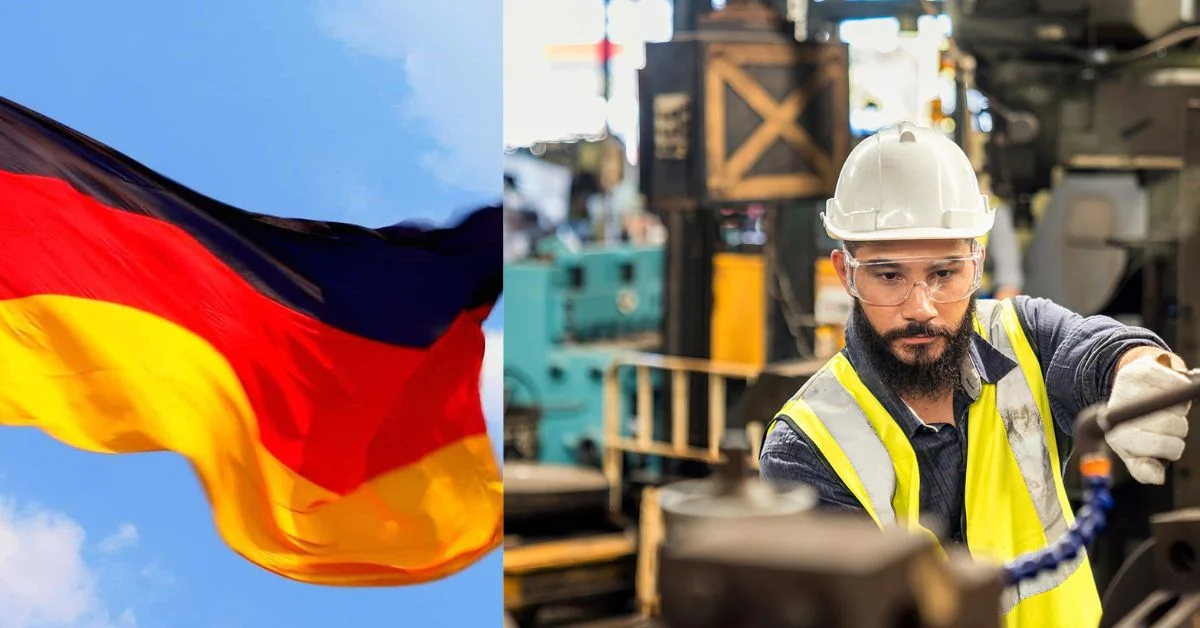
Germany, Europe’s largest economy, continues to experience a complicated labour market in 2025. While certain structural strengths — such as high employment rates among migrants and robust social systems — remain in place, economic headwinds, weak growth and declining job-vacancies are prompting a more cautious outlook. This article dives into the latest labour market data, key trends, challenges and opportunities for workers and foreign professionals in Germany.
📘 Table of Contents
- Overview of Germany’s Labour Market in 2025
- Employment & Unemployment Trends
- Labour Demand, Vacancies & Skill Shortages
- Role of Migrants and Foreign Workers
- Wage Development & Working Conditions
- Training, Apprenticeships & Skills Pipeline
- Outlook: Challenges and Key Risks
- Implications for Foreign Professionals
- Conclusion
🧭 1. Overview of Germany’s Labour Market in 2025
Germany’s labour market in 2025 is characterised by a mixture of resilience and stagnation. The employment rate is rising modestly: according to the Organisation for Economic Co‑operation and Development (OECD), the employment rate in Q1 2025 stood at 77.6%, up from 77.3% in both Q1 2024 and Q1 2023. OECD+1
Despite this, the economy’s growth is very modest — projected at just 0.4% for 2025, and expected to rise to only 1.2% in 2026. OECD+1
Labour-market tightness (vacancies per unemployed person) remains below pre-crisis levels (about 28% below at Q1 2025 in Germany). OECD+1
📉 2. Employment & Unemployment Trends
Employment
- According to the Federal Statistical Office (Germany) (Destatis), the number of persons in employment in March 2025 was roughly 45.7 million. This was virtually unchanged (+0.0 %) from the previous month, but down 0.1 % year-on-year. destatis.de+1
- In July 2025, employment remained at the same level as July 2024 (≈ 0.0% change). destatis.de
Unemployment
- The Federal Employment Agency (BA) reported that in March 2025 there were about 2.967 million unemployed persons in Germany (unadjusted). The unemployment rate for March remained at about 6.4%. Bundesagentur für Arbeit
- In July 2025 the adjusted unemployment rate stood around 3.7%, with 1.64 million persons unemployed (seasonally adjusted). destatis.de+1
Interpretation
Although unemployment rates appear modest to low (especially when using adjusted figures), the labour market is showing signs of sluggishness and mixed signals. Employment growth is flat and the number of vacancies is falling (see next section).
📋 3. Labour Demand, Vacancies & Skill Shortages
- In March 2025, job vacancies registered with the BA stood at 643,000, which is 64,000 fewer than a year earlier. Bundesagentur für Arbeit
- In April 2025, vacancies were about 646,000, still down 55,000 from the previous year. Bundesagentur für Arbeit
- In August 2025, about 631,000 job openings were reported, 68,000 fewer than a year ago. The BA-X index (a measure of labour demand) remained at 98 points in August, down 8 points from the previous year. Bundesagentur für Arbeit
- The OECD data shows that Germany’s labour market tightness remains around 28% below pre-COVID levels, meaning the labour-supply / demand mismatch is less acute than in earlier years. OECD+1
Skill Shortages
Despite weaker demand overall, Germany still reports bottlenecks in certain sectors: for example healthcare, certain trades, engineering, logistics. The mismatch is less about overall vacancies, and more about skills, language and regional imbalances.
🌍 4. Role of Migrants and Foreign Workers
- One notable positive: The employment increase in early 2025 was driven solely by foreign nationals. For example, in the first half of 2025, employment subject to social insurance contributions rose by 46,000 year-on-year — entirely accounted for by foreign nationals. Bundesagentur für Arbeit
- The employment rate among foreign workers is increasing, helping maintain overall employment amid domestic stagnation. OECD+1
This means that foreign skilled and semi-skilled workers remain important for Germany’s labour market health — though competition and language/recognition barriers apply.
💶 5. Wage Development & Working Conditions
- According to the OECD country note, nominal wages in Germany rose by about 2.7% between Q1 2024 and Q1 2025. Real wages grew by about 0.4% over the same period — still about 0.2% below the level in Q1 2021. OECD
- Working conditions in Germany remain strong: regulated working hours, social security coverage, strong worker protections and reliable apprenticeship/training systems.
🎓 6. Training, Apprenticeships & Skills Pipeline
- The apprenticeship market continues to have tensions: For instance, in May 2025, there were 375,000 applicants registered for vocational training, and 441,000 training places available (which was 28,000 fewer than the same time last year). At that time 229,000 places were still vacant. Bundesagentur für Arbeit
- The youth training pipeline is critical, especially given demographic declines and the need for skilled trades.
- Many foreign workers find better access when they have recognized vocational credentials (Ausbildung) or clear pathways of recognition.
⏳ 7. Outlook: Challenges and Key Risks
Economic Growth & Export Risks
Germany’s economy is projected to grow only 0.4% in 2025 and 1.2% in 2026. OECD+1
Risks include weak manufacturing exports, tariff/trade uncertainty, energy cost burdens, and global slowdown.
Structural Demographic Change
An ageing workforce and low birth-rates mean long-term pressure on the labour market and social systems. Migrant labour helps, but language/integration remain barriers.
Labour Market Stagnation
Employment growth is flat. Vacancies are decreasing. The labour-market tightness gap suggests that matching between job-seekers and vacancies is not fully efficient.
Training Mismatches & Regional Imbalances
Some regions in Germany (e.g., parts of East Germany, rural areas) have distinct shortages. Recognition of foreign qualifications, German language requirements and regional willingness to relocate are ongoing issues.
Public Finances Pressure
The labour agency projects budget shortfalls due to rising unemployment benefit claims and weaker labour market uptake. Reuters
🎯 8. Implications for Foreign Professionals
If you are an international professional (skilled worker, tradesperson or migrant), what does this labour-market picture mean for you?
- Opportunities exist, especially in sectors with persistent shortages (healthcare, engineering, trades).
- Ensure your qualifications are recognized in Germany, and ideally have German language skills (B1/B2) if entering vocational/trade markets.
- Be aware that overall demand is not booming — you’ll face competition and the fit (skills + language + recognition) matters.
- Being willing to relocate within Germany (including to regions less saturated like parts of the East or mid-sized cities) can improve chances.
- Working conditions are strong in Germany — if you secure employment you will likely receive solid legal protections, benefits and stability.
- For migration planning: Given slow growth but stable employment, Germany remains a viable destination — but success will rely on alignment of your skills with demand, readiness for recognition processes, and possibly German language acquisition.
🏁 9. Conclusion
The German labour market in 2025 presents a mixed picture: strong foundations, decent employment rates and good protections — yet challenged by weak growth, declining vacancies, and structural shifts. For foreign workers and skilled migrants, this means the opportunity is present, but you’ll need to position yourself carefully. Your best bet is to aim for sectors with known labour shortages, invest in language/trade credential recognition, and consider regional flexibility. Germany remains a top choice — perhaps not booming, but stable and structured.